
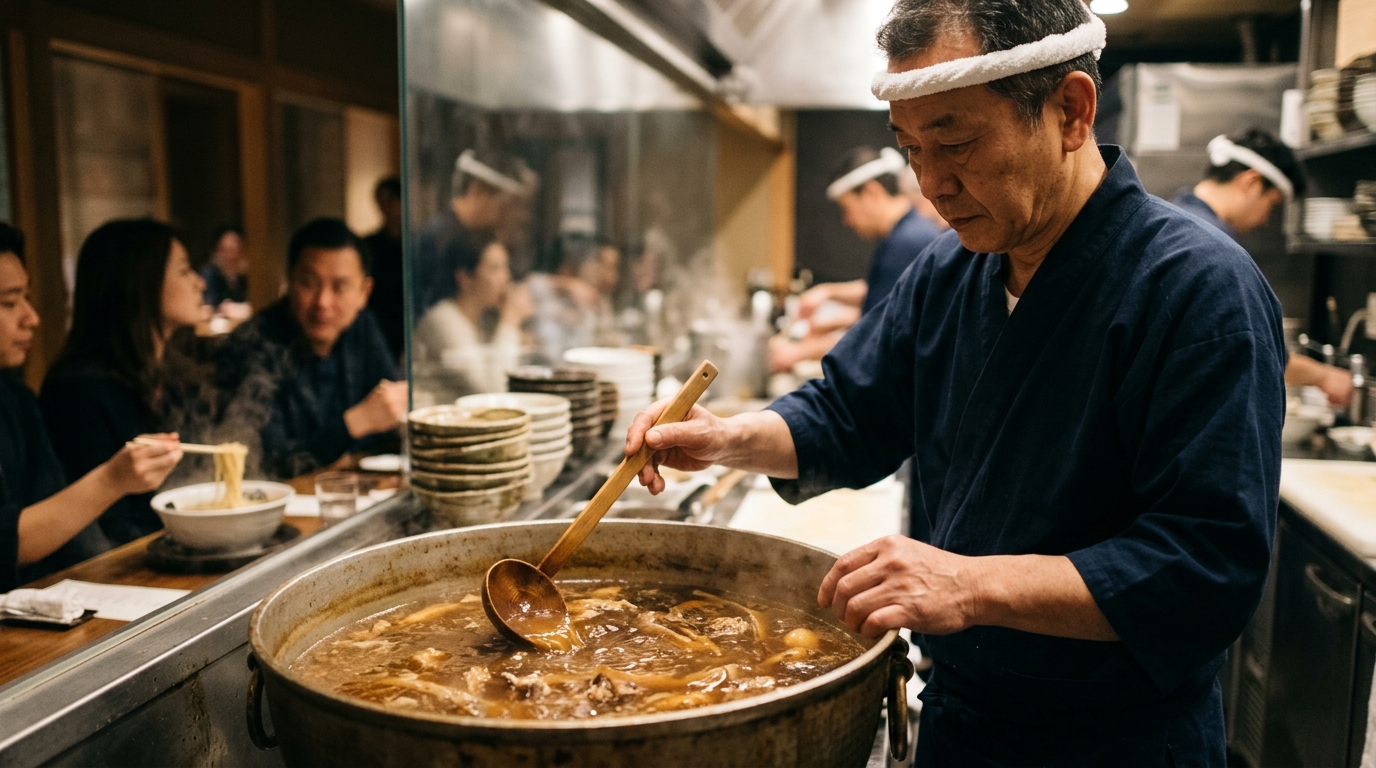
Authentic ramen broth is the primary flavor vehicle in Japanese cuisine, providing the deep umami foundation that defines the dish. Unlike instant noodles, real broth requires hours of slow simmering to extract collagen and minerals from bones. At Zen Ramen & Sushi, we prioritize this traditional technique to ensure every bowl delivers the rich, complex taste expected of genuine Japanese ramen.
The Foundation of Japanese Umami
Japanese cooking relies heavily on the concept of umami, the fifth basic taste. Dashi broth is a Japanese extraction stock built by steeping umami-rich ingredients in water, typically without long simmering times. This precise extraction method pulls specific savory compounds from ingredients like kombu and katsuobushi. The result is a clean, mineral-rich base that supports the entire flavor profile of the dish.
In a ramen kitchen, dashi is one foundational layer. It combines with tare, a concentrated seasoning base, and aroma oil to complete the ramen base. This layered approach ensures that the broth is not just salty, but deeply savory and balanced. The quality of the dashi determines whether the final bowl feels flat or vibrant.
Time and Temperature Control
The difference between rushed broth and patient extraction is not subtle. Authentic tonkotsu broth requires a rolling boil for 12 to 18 hours to emulsify fat and collagen. This aggressive heat breaks down bone marrow into a creamy, opaque liquid. A gentle simmer produces a clear broth, which is fundamentally different in texture and mouthfeel.
Temperature control separates authentic preparation from imitation. Maintaining a vigorous boil for tonkotsu versus a gentle simmer for chintan creates fundamentally different textures. At Zen Ramen & Sushi, we monitor these variables closely to ensure consistency. The time investment is the single biggest differentiator between a high-quality bowl and a shortcut version.
Tare: The Seasoning Anchor
Tare is the concentrated seasoning base added separately to the broth at the bowl stage. This component allows for precise flavor control and consistency across every serving. The ratio of tare to broth is critical; typically, it is one part tare to eight or ten parts broth. Too much tare overwhelms the palate, while too little creates a flat, one-dimensional taste.
Authentic shops make separate tare bases with multiple ingredients, often including soy sauce, mirin, and sake. Fusion restaurants often mix seasoning directly into the broth, which reduces flexibility. By keeping tare separate, chefs can adjust the saltiness and depth for each individual bowl. This technique is a hallmark of professional Japanese ramen preparation.
Regional Styles and Broth Identity
Regional variations reflect local ingredients and historical traditions. Hokkaido miso uses local white miso, while Kyushu tonkotsu employs specific pork breeds. These regional identities make authentic ramen location-specific. A bowl claiming to be authentic should be traceable to a specific regional style, such as Hakata or Sapporo.
Understanding these origins helps diners evaluate what they are eating. The broth technique defines the style, not just the toppings. For example, shoyu ramen originated in Tokyo and features a clear, amber broth. Miso ramen, developed in Hokkaido, carries a nutty, fermented depth. Recognizing these distinctions allows for a more informed and appreciative dining experience.
Freshness and Flavor Degradation
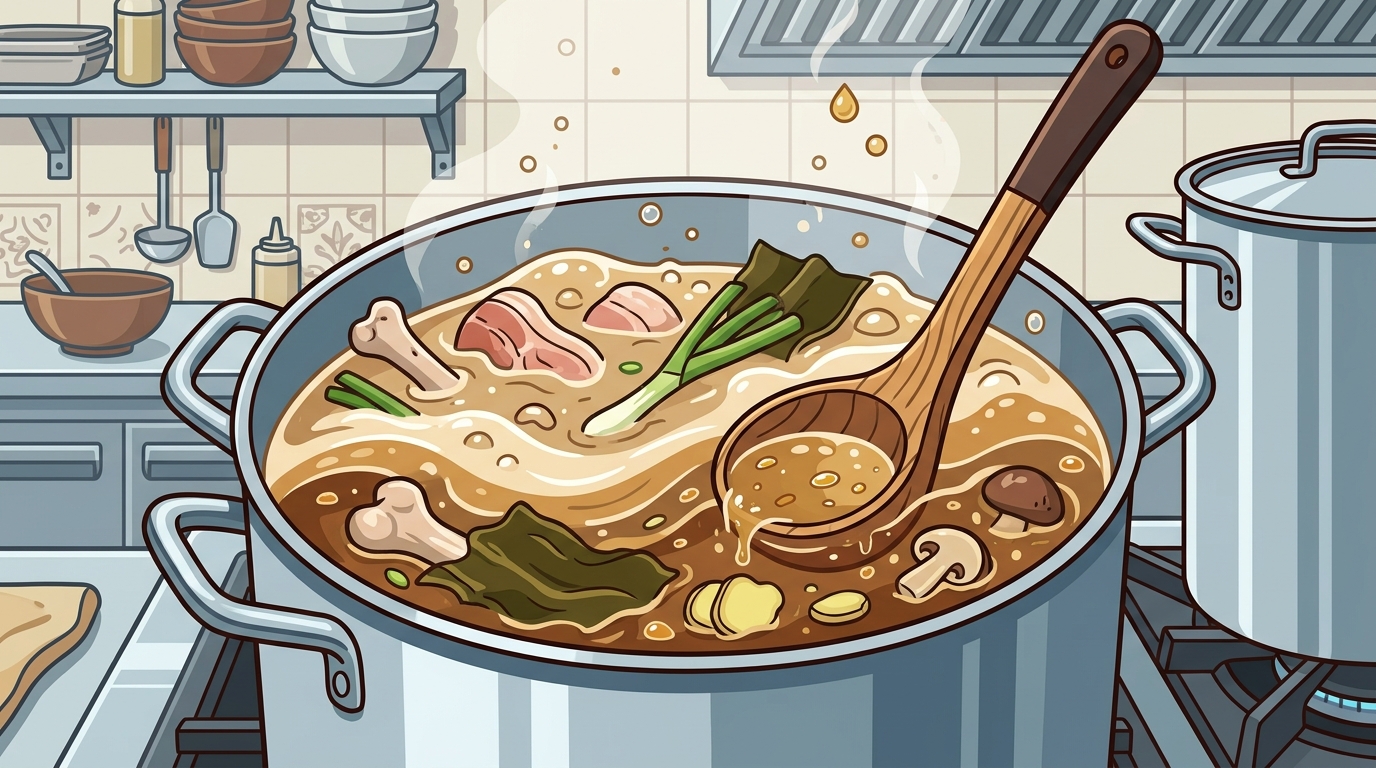
Broth storage degrades quality rapidly. Even when refrigerated, broth loses aromatic volatiles and develops off-flavors within 48 hours. This is why dedicated ramen kitchens prepare broth daily or in small batches. Fresh dashi degrades within 24 hours, losing its top-note delicacy quickly.
Restaurants committed to quality understand this timeline. They do not store large volumes of broth for extended periods. Instead, they focus on daily production cycles to maintain peak flavor. This commitment to freshness is a key indicator of a serious ramen establishment. It ensures that the bowl you eat is at its best possible state.
Key Takeaways
- Dashi broth is the primary flavor vehicle in authentic Japanese ramen, providing the umami foundation.
- Authentic tonkotsu broth requires 12 to 18 hours of rolling boil to achieve its creamy texture.
- Tare is a separate seasoning concentrate that allows for precise salt and flavor control.
- Regional styles like Hakata tonkotsu and Sapporo miso are defined by specific broth techniques.
- Freshness is critical, as broth quality degrades significantly within 48 hours of preparation.
- Temperature control during cooking determines the final texture and opacity of the broth.
Frequently Asked Questions
What is the main difference between authentic ramen broth and instant noodle broth?
Authentic ramen broth is built from scratch using bones, aromatics, and long simmering times. Instant noodle broth is made by dissolving a powder or liquid concentrate in hot water, which lacks the depth and complexity of real broth.
How long does it take to make authentic tonkotsu broth?
Authentic tonkotsu broth typically requires 12 to 18 hours of continuous rolling boil. This long cooking time is necessary to emulsify the fat and collagen from pork bones into the liquid.
What is tare in ramen?
Tare is a concentrated seasoning base added to the broth at the bowl stage. It is made from ingredients like soy sauce, miso, or salt, and it determines the specific style of the ramen.
Why is dashi important in Japanese cooking?
Dashi is the foundational stock in Japanese cuisine, providing the umami flavor that underlies many dishes. It is made by steeping ingredients like kombu and katsuobushi in water.
Can vegetarian ramen be authentic?
Yes, vegetarian ramen can be authentic if it uses proper techniques. A well-executed plant-based broth using kombu and shiitake mushrooms can match the richness of meat-based broths.
How does temperature affect ramen broth?
Temperature control is crucial during cooking and serving. A rolling boil is needed for tonkotsu, while a gentle simmer is used for clear broths. Serving temperature also impacts the texture and flavor perception.
Experience Authentic Broth in Midtown
Understanding the craft behind ramen broth changes how you appreciate the dish. At Zen Ramen & Sushi, we apply these traditional techniques to create bowls that reflect the true spirit of Japanese cuisine. Whether you prefer the richness of tonkotsu or the clarity of shoyu, our commitment to quality ensures a memorable experience. Visit us in Midtown Manhattan to taste the difference that authentic broth makes.