
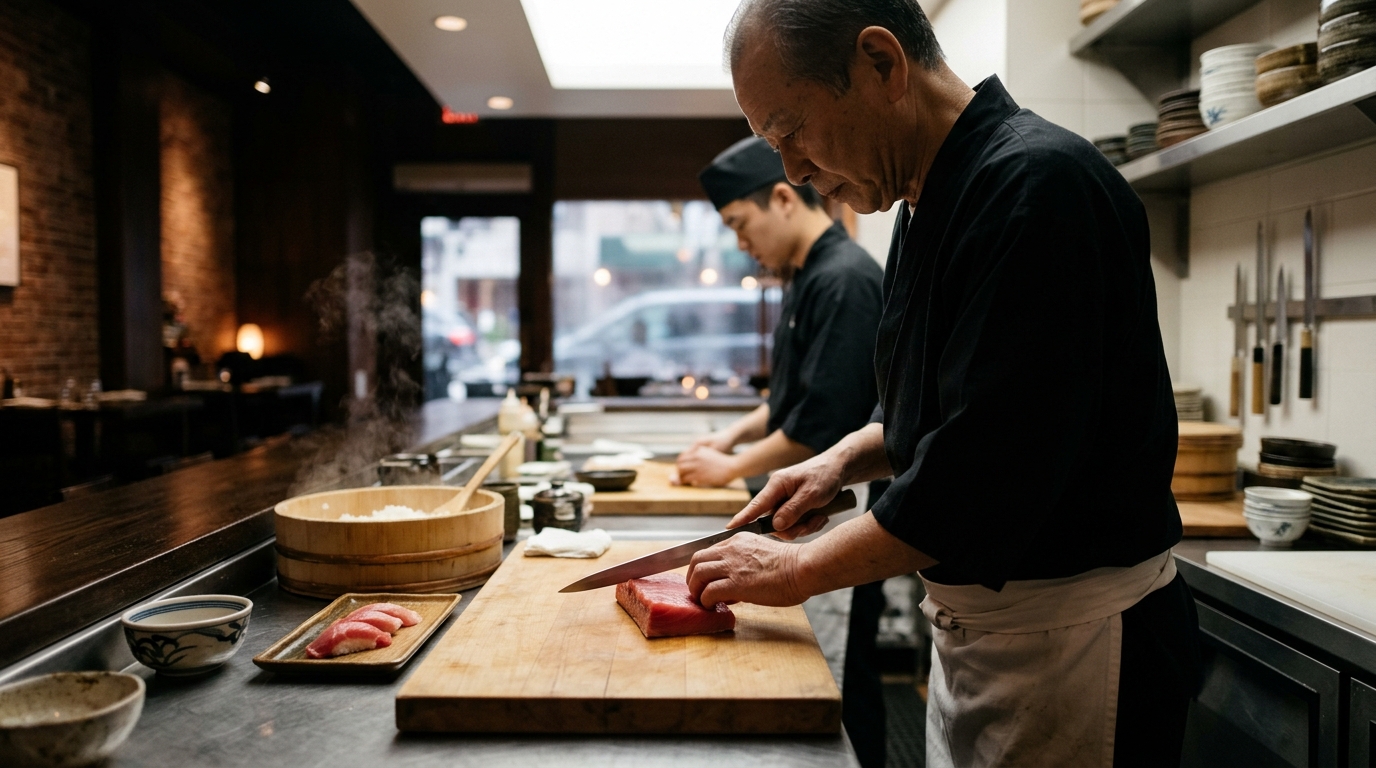
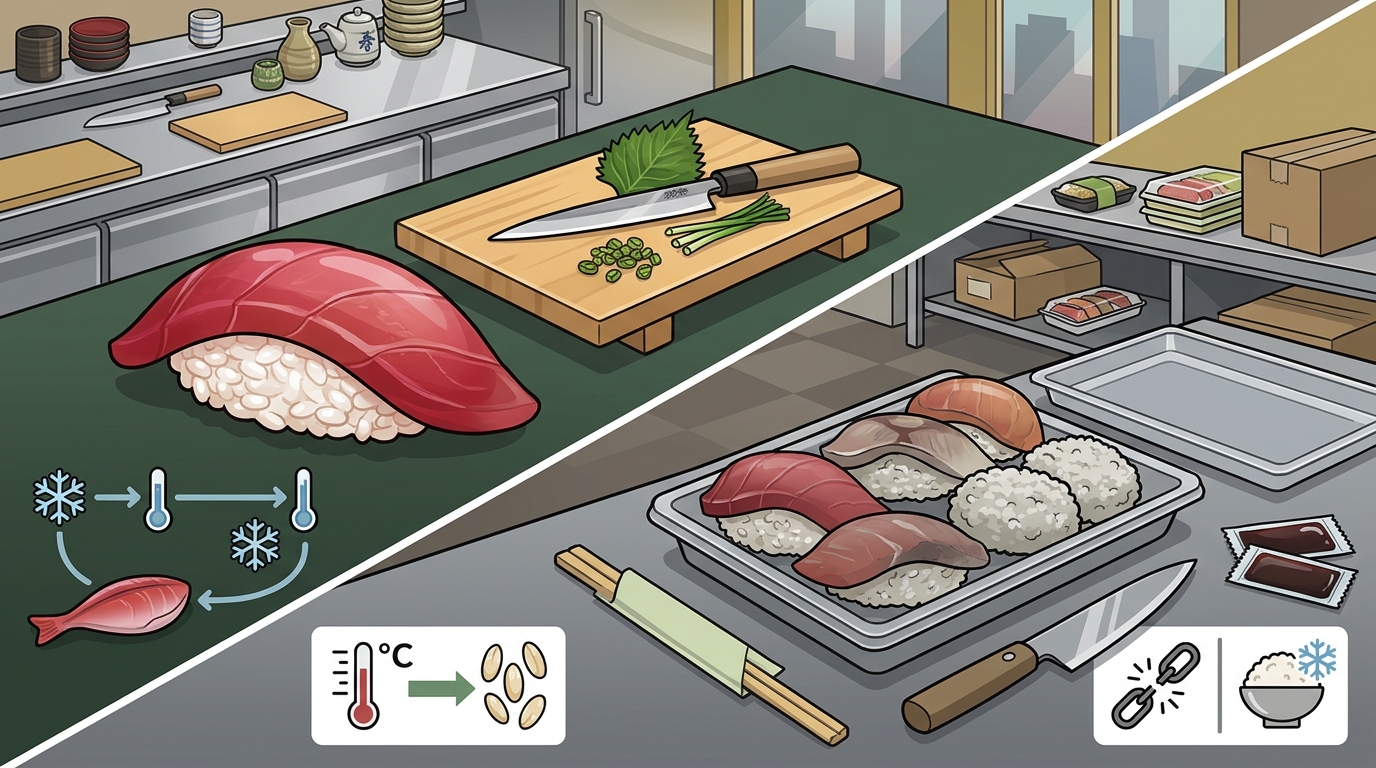
Great sushi in Midtown Manhattan is defined by strict cold chain integrity, precise knife work, and the use of short-grain Japanese rice seasoned to exact specifications. Mediocre options often rely on pre-made components, inconsistent fish sourcing, and rice that has cooled below the ideal serving temperature. At Zen Ramen & Sushi, we prioritize these technical fundamentals to ensure every plate reflects authentic Japanese culinary standards rather than fast-casual shortcuts.
The Critical Role of Cold Chain Integrity
The single biggest differentiator between exceptional and average sushi is the temperature control of the fish from the moment it leaves the water until it reaches the cutting board. Sushi-grade fish is not a regulated government label but a voluntary industry standard that signals a vendor's commitment to specific handling protocols. When a restaurant cannot explain its sourcing regions or delivery frequency, the quality of the raw fish is almost certainly compromised. A fish that sits for extra days at a distributor cannot be recovered by even the most skilled chef, making supply chain transparency the first indicator of a serious kitchen.
At Zen Ramen & Sushi, we focus on daily fish deliveries to maintain peak freshness. This approach ensures that the texture and flavor of the seafood remain vibrant. For diners, the implication is simple: ask your server about the day's fish selection. A high-quality establishment will know the provenance of their ingredients and be able to discuss the specific cuts available that day.
Rice Temperature and Seasoning Precision
Most diners focus entirely on the fish, but the rice is the engineered foundation of every piece of sushi. Sushi rice, known as shari, is not a neutral base; it is a technical component with precise starch behavior and moisture content. The ideal serving temperature for sushi rice is approximately 98 degrees Fahrenheit, which is roughly body temperature. This warmth contrasts with the cold fish to create a dynamic eating experience. If the rice is cold, it becomes starchy and overly salty, while hot rice can steam the fish and muddle its delicate flavors.
The seasoning process is equally critical. The vinegar, sugar, and salt mixture must be folded into the rice while it is still hot to ensure even absorption. Fanning the rice during this process evaporates excess surface moisture, creating the characteristic lustrous sheen of well-made sushi rice. At Zen Ramen & Sushi, our chefs adhere to these traditional methods, ensuring that the rice complements rather than competes with the seafood. This attention to detail separates a memorable meal from a forgettable one.
Knife Work and Fish Sourcing Standards
Knife work is the visible proof of a chef's skill. Clean, precise cuts require a sharp knife and a steady hand, resulting in slices that are uniform in thickness and free of jagged edges. Jagged or uneven slices indicate rushed preparation or poor technique, which can affect both the texture and the presentation of the dish. Furthermore, the sourcing of the fish itself plays a major role in safety and quality. The FDA Food Code requires fish served raw to be frozen at specific temperatures to destroy parasites, a process that, when done correctly, preserves texture and flavor.
Understanding these standards helps diners make better choices. For example, farmed salmon is often safer for raw consumption than wild-caught salmon because the controlled feed eliminates parasite risk. At Zen Ramen & Sushi, we select fish based on these safety and quality metrics, not just on marketing labels. This ensures that every piece of sashimi or nigiri you eat meets the highest standards of freshness and safety.
Service Knowledge and Dining Etiquette
The staff at a truly great sushi restaurant should be able to explain the food they are serving. If a server cannot describe the broth base of a ramen bowl or the specific cut of a fish, the kitchen likely does not invest in training its team. This lack of knowledge often reflects broader standards in the kitchen. Additionally, understanding basic Japanese dining etiquette can enhance your experience. For instance, dipping the fish side of nigiri into soy sauce, rather than the rice, prevents the rice from absorbing too much salt and disintegrating.
At Zen Ramen & Sushi, our team is trained to guide guests through the menu with confidence and respect. We encourage diners to ask questions about the day's specials or the preparation of specific dishes. This interaction not only educates the guest but also demonstrates the restaurant's commitment to authentic Japanese hospitality. The goal is to create an environment where the food is appreciated for its craftsmanship, not just its taste.
Key Takeaways
- Sushi-grade is not a regulated label; it reflects a vendor's internal handling standards and sourcing practices.
- The ideal serving temperature for sushi rice is approximately 98 degrees Fahrenheit to balance with cold fish.
- Knife work quality is a direct indicator of a chef's skill and the kitchen's overall standards.
- Daily fish deliveries are a strong signal of a restaurant's commitment to freshness and quality.
- Staff knowledge of ingredients and preparation methods reflects the kitchen's investment in training.
- Proper freezing is a safety requirement for most raw fish, not a shortcut that degrades quality.
Frequently Asked Questions
Is sushi-grade fish a government certification?
No, sushi-grade is not a regulated government certification. It is an informal industry term that signals a vendor's commitment to specific handling and freezing protocols to ensure safety for raw consumption.
What is the ideal temperature for sushi rice?
The ideal temperature for sushi rice is approximately 98 degrees Fahrenheit, or body temperature. This warmth contrasts with the cold fish to create a balanced eating experience.
How can I tell if a sushi restaurant takes quality seriously?
Look for staff who can explain their sourcing, daily delivery schedules, and preparation methods. A focused menu and clean, precise knife work are also strong indicators of a serious kitchen.
Why is knife work important in sushi preparation?
Knife work affects the texture, presentation, and overall quality of the sushi. Clean, precise cuts indicate a skilled chef and a well-run kitchen, while jagged slices suggest rushed or poor technique.
What is the role of vinegar in sushi rice?
Vinegar, along with sugar and salt, seasons the rice to create a tangy, subtly sweet flavor profile. It must be folded into the rice while it is hot to ensure even absorption and the correct texture.
Does freezing ruin the quality of fish?
No, proper flash-freezing at extremely low temperatures preserves texture and flavor while meeting FDA parasite destruction requirements. It is a safety step, not a quality compromise.
Experience Authentic Quality in Midtown
When you visit Zen Ramen & Sushi in Midtown Manhattan, you are choosing a restaurant that prioritizes technical precision and authentic Japanese standards. Whether you are ordering premium nigiri, fresh sashimi, or our signature ramen, you can expect a dining experience built on quality ingredients and skilled preparation. We invite you to explore our menu and discover the difference that true craftsmanship makes in every bite.