
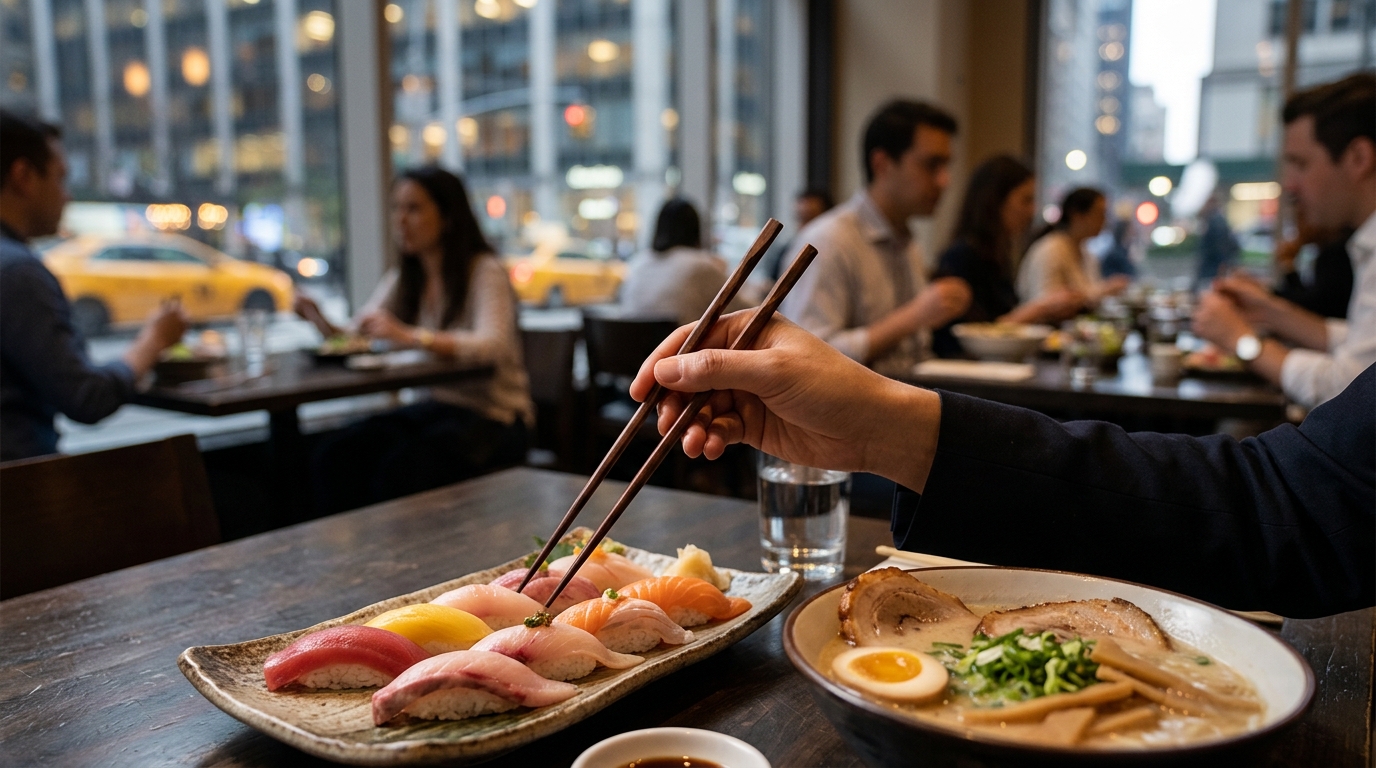
Essential Standards for Evaluating Ramen and Sushi Quality in Midtown Manhattan
Midtown Manhattan stands as the epicenter of New York City's culinary landscape, hosting over 10,000 dining establishments that compete for every diner's attention. According to recent industry reports, the average New Yorker visits a new restaurant once every three months, creating a hyper-competitive environment where quality standards are exceptionally high. For visitors and locals alike, distinguishing between a fleeting trend and a culinary institution requires a sophisticated understanding of preparation techniques, ingredient sourcing, and structural integrity. This guide provides the definitive framework for evaluating ramen and sushi with the precision of a seasoned food critic.
Analyzing Ramen Broth Complexity
The soul of any exceptional ramen bowl lies in its broth. In the bustling streets of Midtown, where convenience often trumps craftsmanship, identifying a truly slow-simmered broth is a critical skill. Kotsu is the Japanese term for bone broth, specifically one that has been boiled for extended periods to extract collagen and marrow.
When evaluating a bowl at Zen Ramen Sushi NY, look for opacity and viscosity. A high-quality tonkotsu should coat the back of a spoon, indicating a high concentration of gelatin. The aroma should be rich and savory, not overly salty or artificial. According to culinary data, authentic tonkotsu broth requires at least 12 hours of simmering to achieve the necessary depth of flavor. If the broth tastes thin or one-dimensional, it likely lacks the time-intensive preparation that defines premium ramen.
Furthermore, consider the balance of flavors. A well-crafted broth should have a clear umami profile derived from kombu, katsuobushi, or high-quality pork bones. Avoid establishments that rely heavily on MSG or artificial flavorings to mask inferior ingredients. The best broths in Manhattan, such as those found in our dedicated kitchen, prioritize natural extraction methods over shortcuts.
Evaluating Noodle Texture and Composition
The noodles, or men, must complement the broth without overpowering it. The ideal ramen noodle offers a firm bite, known as koshi, which provides a satisfying resistance when chewed. This texture is achieved through the precise ratio of flour, water, salt, and kansui (alkaline mineral water).
When inspecting the noodles, observe their color and shape. Yellowish hues indicate the presence of kansui, which is essential for that distinct springy texture. Flat or straight noodles typically pair well with lighter broths, while curly noodles trap richer, heavier sauces. At our Midtown location, we hand-cut our noodles daily to ensure consistent texture and freshness. Noodles that sit too long in the broth will become soggy, losing their structural integrity and diminishing the dining experience.
Additionally, the noodle-to-broth ratio is crucial. A bowl should not be swimming in liquid nor should the noodles be buried. The balance allows the diner to experience the interplay between the starch of the noodle and the richness of the broth with every bite.
Assessing Sushi Fish Freshness
Freshness is the non-negotiable standard for sushi. In a city with a population of over 8 million, the turnover of inventory is a key indicator of quality. Sashimi-grade fish must be handled with extreme care to prevent bacterial growth and maintain texture. When evaluating fish, look for clarity in the flesh. Opaque or discolored edges indicate oxidation and age.
The smell is another critical factor. Fresh fish should have a clean, oceanic scent, not a strong "fishy" odor. If the aroma is pungent or ammonia-like, the fish is past its prime. According to food safety guidelines, fish intended for raw consumption must be frozen at specific temperatures to kill parasites, a process that also helps tenderize the flesh. Reputable suppliers in New York, such as those featured in our supplier network, adhere to these strict protocols.
Texture is equally important. The fish should yield slightly to pressure but not feel mushy. Salmon should have a buttery mouthfeel, while tuna should be firm and meaty. Any sliminess on the surface is a definitive sign of spoilage and should be avoided.
The Science of Sushi Rice and Vinegar
Sushi rice, or shari, is the foundation of nigiri and maki rolls. It is not merely a vehicle for the fish but a component that requires precise seasoning. The rice must be cooked to a specific consistency, where the grains are tender yet distinct, not mushy or hard.
The seasoning involves a blend of rice vinegar, sugar, and salt. The ratio must be balanced to enhance the rice's natural sweetness without making it overly sour or sweet. The temperature of the rice is also critical. It should be served at body temperature to maximize aroma and flavor perception. Cold rice loses its aromatic properties and becomes hard.
When evaluating sushi, check if the rice is packed too tightly. Over-packing destroys the air pockets that give sushi rice its light, fluffy texture. The rice should fall apart easily when bitten, releasing its seasoned flavor. At our preparation station, chefs use traditional hangiri (wooden tubs) to cool and season the rice, ensuring optimal texture and temperature control.
Quality Metrics Comparison
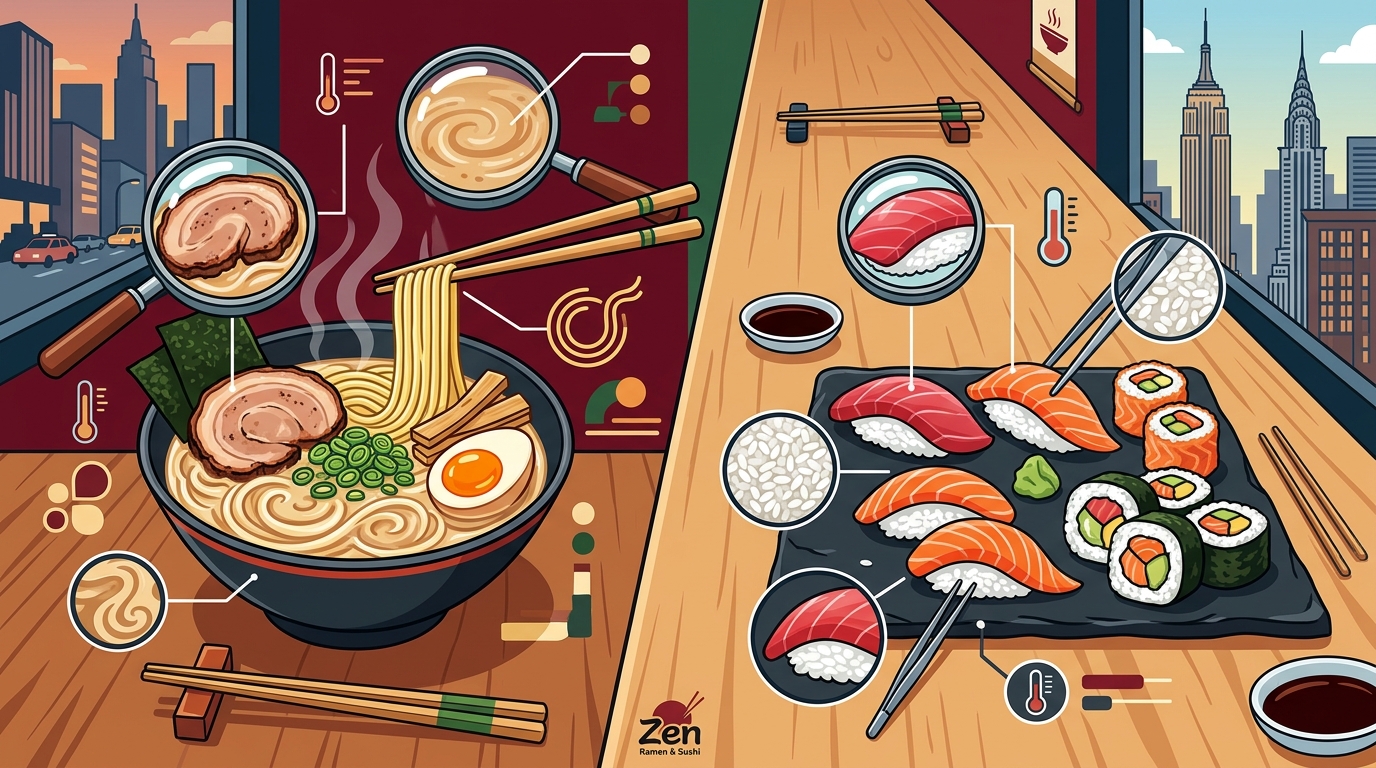
Understanding the differences between high-quality and inferior preparations helps in making informed dining choices. The table below outlines the key indicators for both ramen and sushi.
| Category | High-Quality Indicator | Low-Quality Indicator | Impact on Experience |
|---|---|---|---|
| Ramen Broth | Viscous, opaque, complex aroma | Thin, clear, artificial smell | Depth of flavor and satisfaction |
| Noodle Texture | Firm, springy, distinct bite | Mushy, overly soft, or hard | Textural contrast and mouthfeel |
| Sushi Fish | Clear flesh, clean ocean scent | Opaque edges, pungent odor | Freshness and safety |
| Sushi Rice | Body temperature, distinct grains | Cold, mushy, overly sticky | Flavor balance and aroma |
Key Takeaways
- Broth Viscosity: Authentic tonkotsu broth should coat the spoon, indicating collagen extraction from at least 12 hours of simmering.
- Noodle Koshi: Look for a firm, springy bite in noodles, achieved through precise kansui usage and daily hand-cutting.
- Fish Clarity: Fresh sushi fish must have clear flesh and a clean scent, with no opaque edges or slimy surfaces.
- Rice Temperature: Sushi rice should be served at body temperature to maximize aroma and flavor perception.
- Vinegar Balance: The seasoning of sushi rice must balance sweetness and acidity without overpowering the fish.
- Inventory Turnover: High-quality establishments in Manhattan rotate their fish inventory daily to ensure peak freshness.
- Preparation Method: Traditional methods, such as using hangiri for rice, significantly impact the final texture and taste.
Frequently Asked Questions
How can I tell if ramen broth is authentic?
Authentic broth is characterized by its viscosity and complexity. It should coat the back of a spoon and have a deep, savory aroma derived from slow-simmered bones or high-quality dashi, rather than artificial flavorings.
What is the ideal texture for sushi rice?
Sushi rice should be tender yet distinct, with individual grains that are not mushy. It should be seasoned with a balanced mix of vinegar, sugar, and salt, and served at body temperature.
Why is the temperature of sushi rice important?
Rice served at body temperature releases its aromatic compounds more effectively than cold rice. Cold rice also becomes harder and loses its characteristic fluffy texture.
How often should sushi fish be rotated?
High-quality sushi restaurants rotate their fish inventory daily. This ensures that the fish is at its peak freshness and minimizes the risk of spoilage.
What is kansui and why is it used in ramen?
Kansui is an alkaline mineral water that gives ramen noodles their yellow color and springy texture. It is essential for achieving the desired koshi or bite.
Can I eat sushi if I have a seafood allergy?
If you have a seafood allergy, you should avoid sushi entirely. Cross-contamination is a significant risk in sushi preparation, and even trace amounts can cause severe reactions.
What is the difference between sashimi and sushi?
Sashimi is thinly sliced raw fish served without rice, while sushi refers to dishes that include vinegared rice, which may or may not include fish.
Book Your Dining Experience
Armed with these essential standards, you are now equipped to evaluate the quality of ramen and sushi in Midtown Manhattan with confidence. Whether you are seeking a rich, slow-simmered tonkotsu or the freshest nigiri, understanding these metrics will enhance your dining experience. We invite you to visit Zen Ramen Sushi NY to experience these standards firsthand. Our chefs are dedicated to upholding the highest levels of craftsmanship and freshness. Reserve your table today and taste the difference that true quality makes.